The $227,000 Question: How to Validate Your gTLD Strategy Before Applying to ICANN Round 2
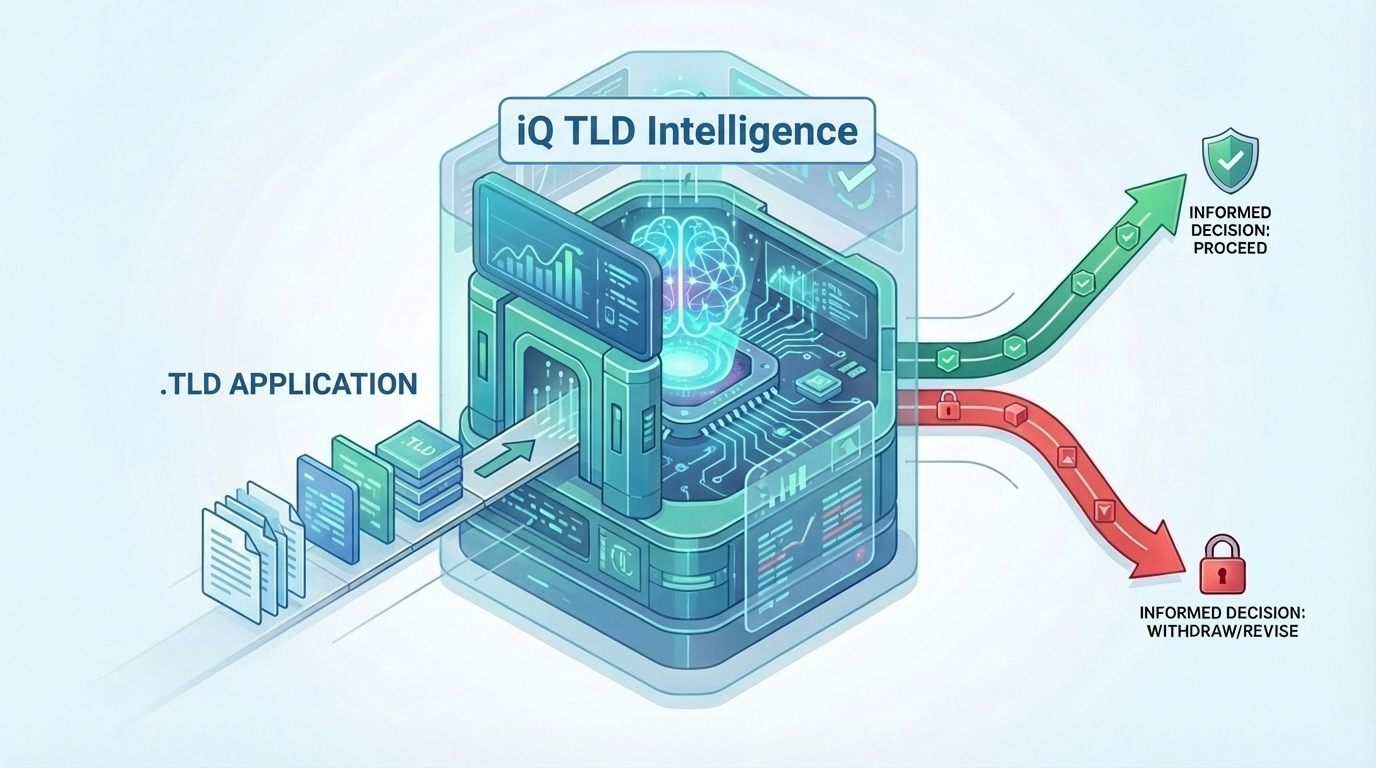
Before you invest $227,000 in an ICANN application fee, answer this: Is your string viable?
This is the question that determines whether your investment succeeds or fails.
ICANN's Round 2 application window opens in April 2026, just four months away. The new Applicant Guidebook contains 233 questions across nearly 400 pages. The total investment runs between $500,000 and $2 million per gTLD when you factor in development, operations, and ongoing costs.
Here's the reality nobody likes to discuss: Round 1 delegated over 1,000 new gTLDs between 2013-2016, significantly expanding the namespace. Round 2 applicants enter a mature market where differentiation and clear value propositions matter more than ever.
Not every string idea should become a TLD.
So let's start with the hard question: Why would anyone apply for a gTLD in 2026?
Why Apply? The Strategic Case
Despite the mature market, compelling reasons exist for organizations to pursue gTLDs:
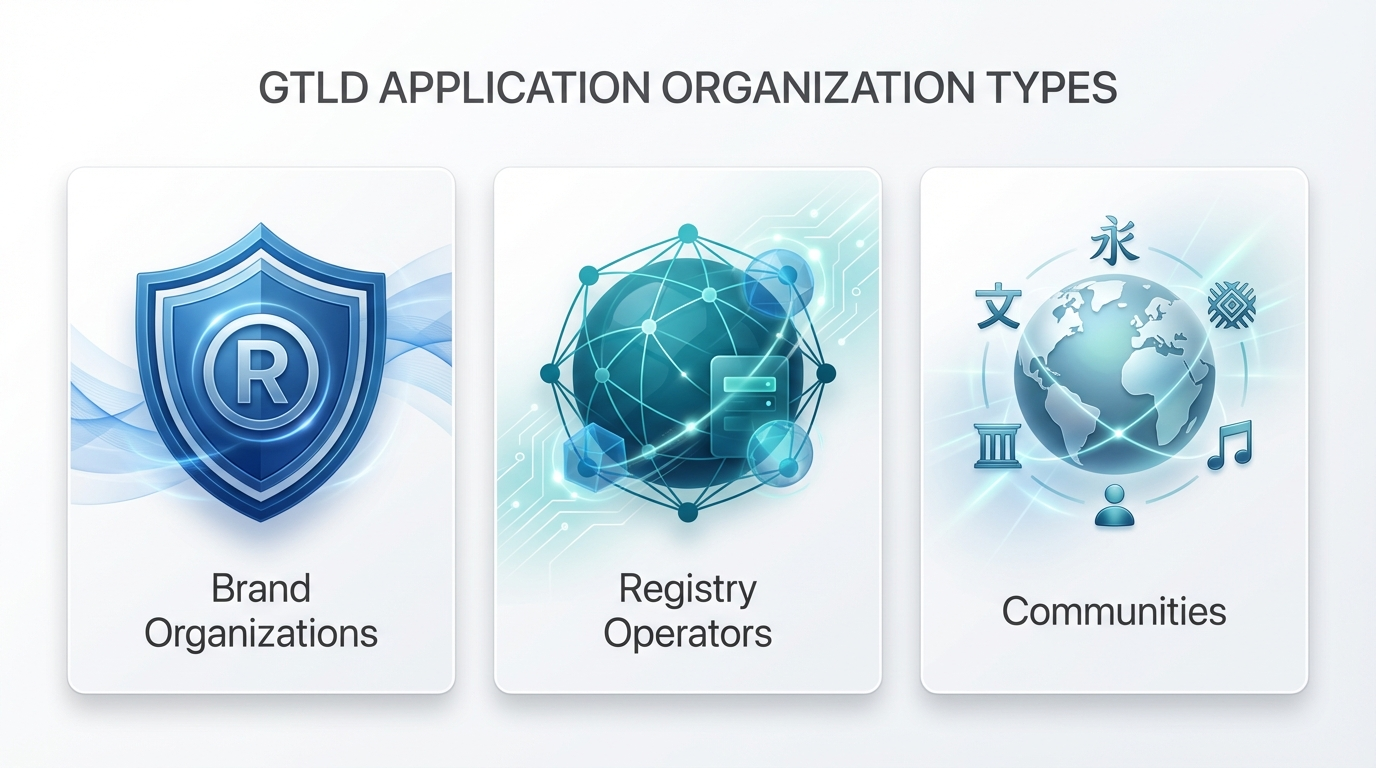
Brand Organizations: Complete namespace control prevents phishing, counterfeits, and cybersquatting within your .brand TLD while enabling enforcement of higher security standards. Provides marketing differentiation and serves as an innovation platform for emerging use cases.
Registry Operators: Category leadership opportunities in underserved verticals, with proven business models when genuine demand exists and you control distribution.
Communities: Digital identity and cultural preservation for language, geographic, and cultural groups seeking controlled namespace representation.
Not every organization should run a TLD. The question isn't "Can we apply?" but "Should we apply?"
If You Decide to Pursue: The Validation Question
Let's say you've considered the strategic case and decided a gTLD makes sense for your organization. Now you face a different question:
How do you know your specific string (the actual TLD characters you want) will be viable before you invest $227,000?
What Round 1 Taught Us
Round 1 delegated over 1,000 TLDs, significantly expanding the DNS namespace. The experience revealed important lessons about post-launch success.
Many applicants projected their string would naturally attract registrants. They assumed the namespace itself would drive demand, marketing would be straightforward, and adoption would be swift.
The reality proved different. Successful Round 1 TLDs invested heavily in sustained brand building—content, events, communities, partnerships—treating their extension as a long-term investment requiring significant capital over years, not months. The key lesson: Delegation is the starting point, not the finish line.
Round 2's Game-Changer: New Contention Rules
Before we discuss validation, you need to understand a critical change that fundamentally alters Round 2 strategy: private resolution of contention is now completely prohibited.
What This Means
In Round 1, if multiple applicants wanted the same string, they could negotiate privately: make deals, conduct private auctions, form joint ventures, or arrange buyouts. This provided flexibility when string conflicts arose.
Round 2 eliminates this option entirely. If you and another applicant want the same string, your only choices are:
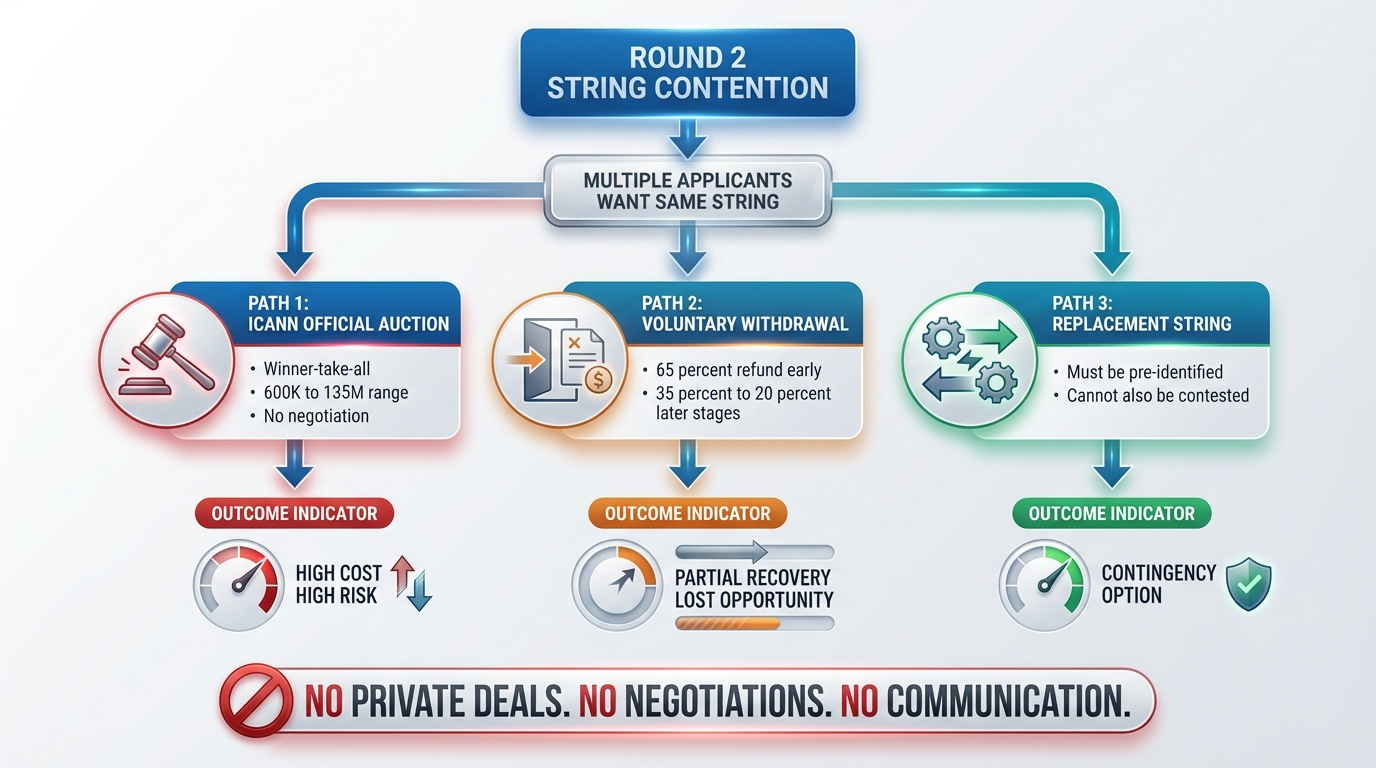
- ICANN's official auction: Winner-take-all, potentially costing millions beyond the application fee, with no negotiation possible
- Voluntary withdrawal: Walk away with partial refund (65% if withdrawn early, declining to 35% and 20% at later stages)
- Switch to replacement string: If you identified one in your initial application and it isn't also contested
There are no deals, no negotiations, no private arrangements. Applicants in contention sets are strictly prohibited from communicating with each other.
Why This Changes String Selection
This means contention risk is no longer just an inconvenience. It is potentially catastrophic.
A "great" string with high contention likelihood might be a worse choice than a "good" string with lower contention probability.
Capital reserves for potential auction costs become essential. Previous contention auctions ranged from $600,000 to $135 million, with highly desirable generic terms commanding the highest prices. The .web auction in 2016 set the record at $135 million.
You must identify a viable replacement string before you apply, not after. String uniqueness and differentiation become critical selection criteria, not just market viability.
The validation question isn't just "Is this string viable?" It's "Is this string viable, and if contention occurs, can we compete in the auction or is our replacement string solid?"
Applications are confidential until Reveal Day, so you won't know actual contention until after you've invested. But you can assess probability: Generic terms and valuable keywords face higher contention risk than unique, differentiated strings. Proper validation helps you plan for this scenario before investing.
Why Validation Matters: Risk Reduction, Not Guarantees
Let's be clear about what validation can and cannot do.
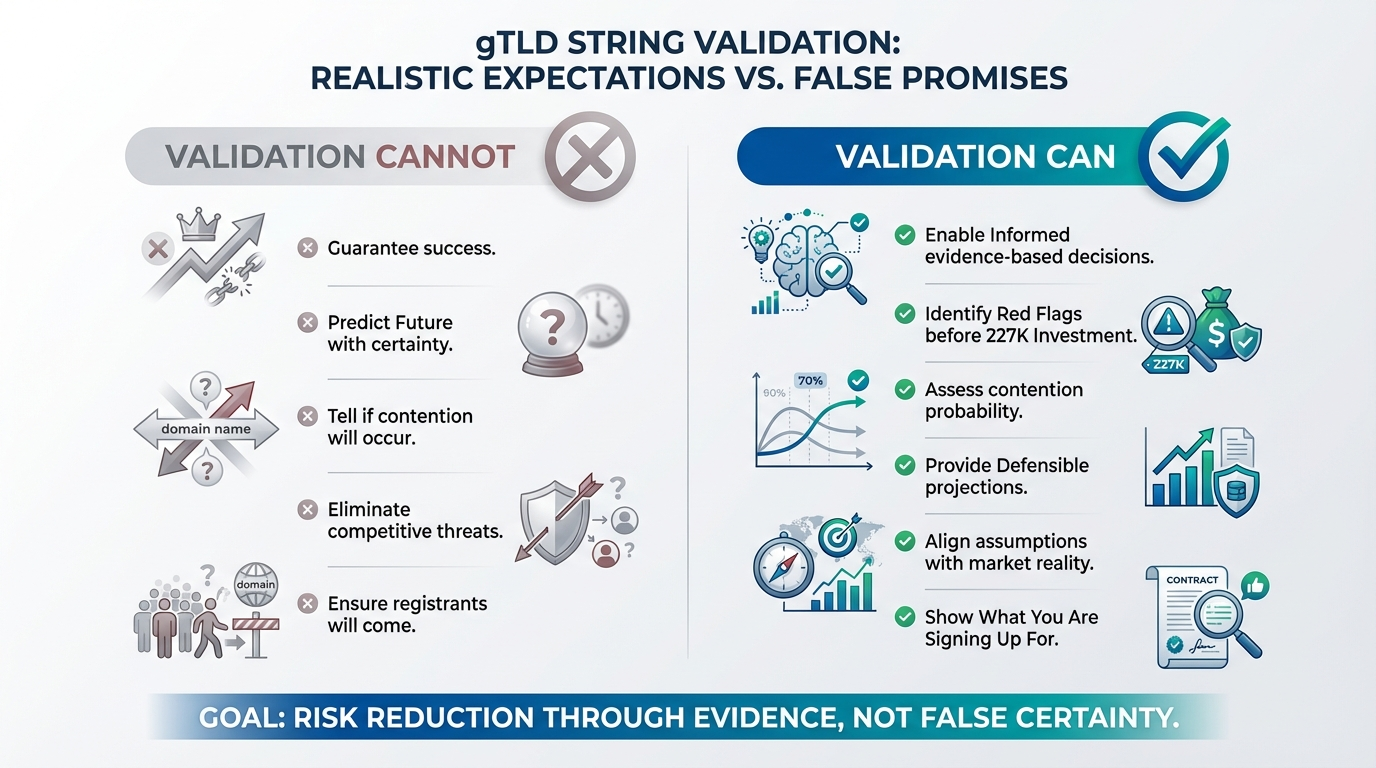
Validation cannot:
- Guarantee your TLD will succeed
- Predict future market conditions with certainty
- Tell you if contention will occur (applications are confidential until reveal day)
- Eliminate competitive threats
- Ensure registrants will come
Validation can:
- Help you make informed decisions based on evidence
- Identify obvious red flags before you invest $227,000
- Assess contention probability and help you plan for that scenario
- Provide defensible projections based on comparable TLDs
- Reveal whether your assumptions align with market reality
- Show you what you're actually signing up for
The goal is not certainty; that does not exist. The goal is to understand what you are getting into and make a decision with eyes wide open. Proper assessment dramatically reduces the risk of preventable failure.
AI-Assisted Validation: Solving the Time-Cost Barrier
Whether you're evaluating a single string or comparing a portfolio of candidates, the core validation challenge is the same: determining string viability, assessing contention risk, identifying viable replacement strings, and making evidence-based go/no-go decisions before applying.
The solution? AI-assisted frameworks that compress weeks of analysis into days without sacrificing quality.
This isn't generic AI applied to domain expertise. It's domain expertise codified into systematic workflows that AI executes consistently. The frameworks incorporate years of industry experience, ICANN compliance standards, financial modeling best practices, and Round 1 lessons. What traditionally required weeks of analyst work now completes rapidly through automated execution of the same analytical processes.
For single-string applicants, this means completing comprehensive validation in 3-5 days instead of weeks, with confidence-backed recommendations before committing resources.
For portfolio applicants testing multiple strings, the advantage is even more dramatic: systematic comparison of ten strings in the time traditionally needed for one to two, enabling evidence-based prioritization rather than sequential analysis limited by time and budget constraints. Cost barriers that made comprehensive validation prohibitive ($50,000-$150,000+ per string with traditional consulting) become manageable.
How AI-Assisted Validation Works
AI-assisted validation operates through systematic workflows that address four critical areas:
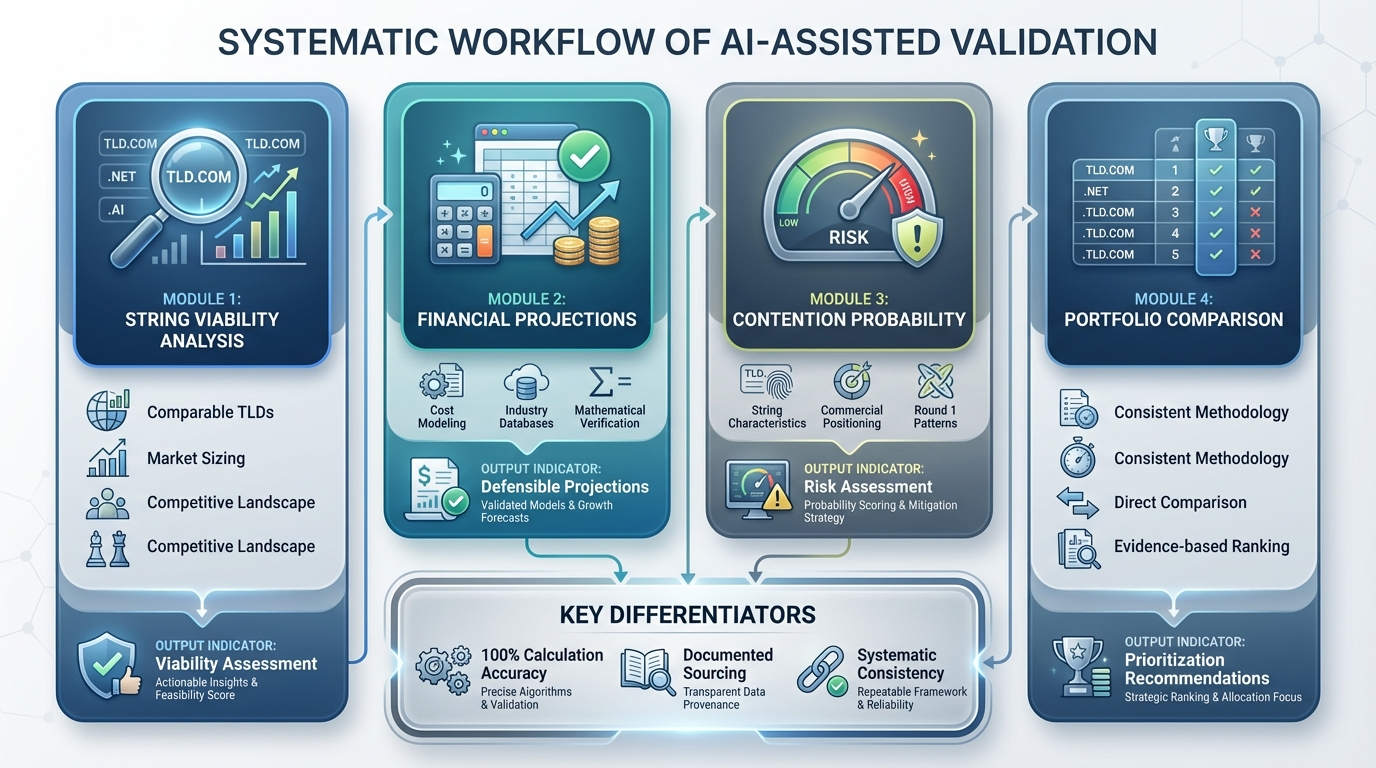
- String viability analysis: Comparable TLDs, market sizing, competitive landscape
- Financial projections: Cost modeling with industry databases and mathematical verification
- Contention probability assessment: Evaluating string characteristics, commercial positioning, and Round 1 patterns
- Portfolio comparison: Consistent methodology enabling direct comparison across multiple strings
What makes this approach effective isn't just speed and cost—it's quality. Every calculation undergoes automated mathematical verification for 100% accuracy. All cost parameters trace to industry databases with documented sourcing. Portfolio applicants benefit from systematic consistency: every string analyzed using identical methodology, enabling evidence-based prioritization rather than subjective judgment.
When Traditional Consulting Still Makes Sense
AI-assisted validation excels at systematic analysis, portfolio comparison, and mathematical verification. Complex multi-party applications, highly specialized geographic TLDs, or regulatory-intensive situations may require expert consultation. The real advantage emerges when experts work with AI-assisted frameworks: combining specialized domain knowledge with systematic validation delivers insights faster and more rigorously than either traditional consulting or AI alone.
Why iQ Global
We bring together two capabilities that rarely exist in one place. As former registry and registrar operators, we understand the domain industry from the inside: ICANN compliance requirements, operational realities, and how to make TLDs succeed.
On the technology side, we are building production AI systems at scale. OpenAI recently recognized our processing of over 10 billion tokens through their API, reflecting our deep expertise in deploying AI that works in real business environments.
This combination of domain expertise and cutting-edge AI enables validation frameworks that traditional consultants and generic AI tools simply can't match.
How We Work With Clients
Our work combines domain expertise with AI-assisted frameworks to deliver fast, rigorous validation. We structure engagements based on what you need, for example:
String Validation: Comprehensive validation of one or more strings: comparable TLD analysis, financial modeling, contention assessment, and viability recommendations.
Validation + Business Case Development: String validation plus assistance building internal business cases for stakeholder approval: board presentations, ROI analysis, strategic justification, risk assessment. This works well for organizations needing to secure internal approval before proceeding, particularly for brand TLDs requiring significant capital commitment.
Full Application Support: End-to-end support from validation through ICANN application submission: string validation, business case development, application preparation, technical requirements, ongoing application management.
All engagements use the same expert-guided, AI-assisted validation methodology. The difference is scope and deliverables, not quality or rigor.
The Timeline Reality
With ICANN's application window opening in April 2026, Q1 2026 represents the optimal validation period. This timing allows organizations to:
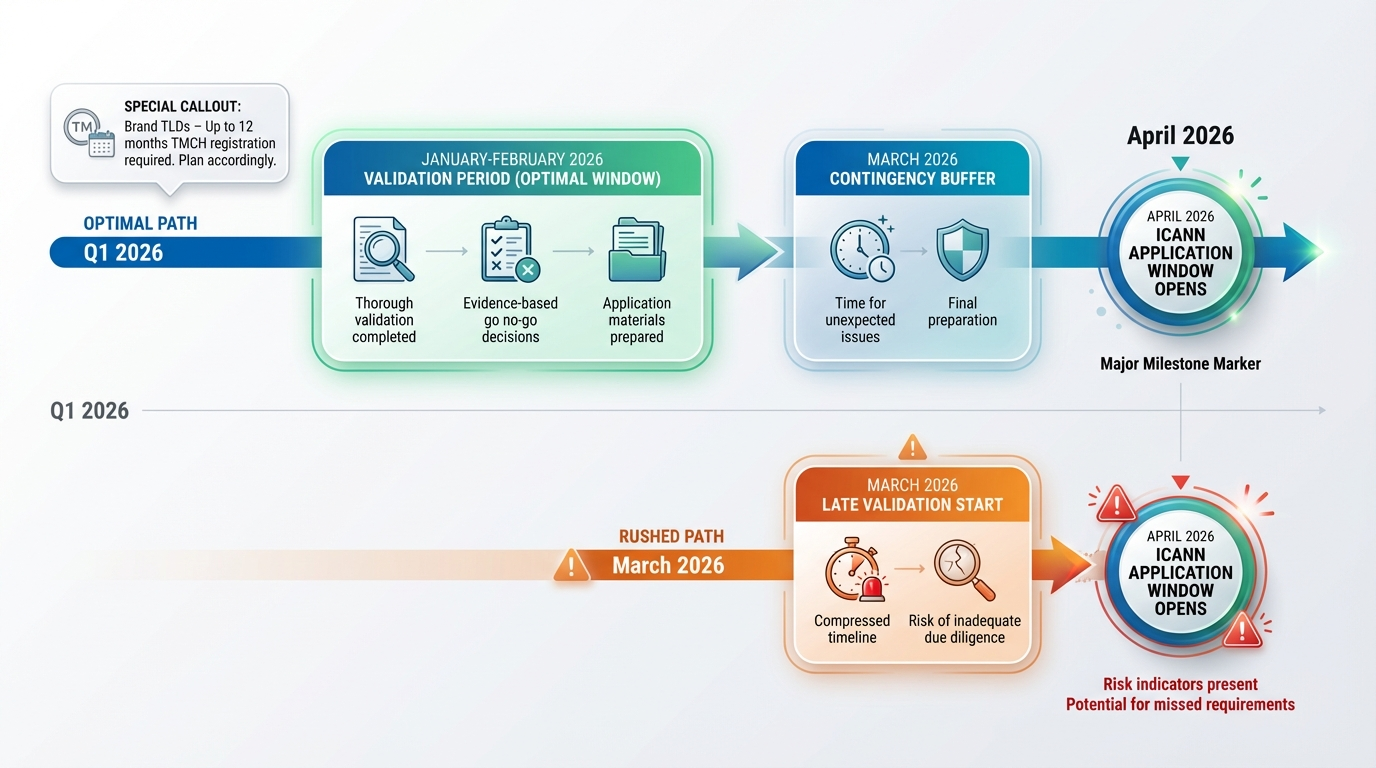
- Complete thorough validation
- Make informed go/no-go decisions based on data
- Prepare application materials for viable strings
- Have contingency time for unexpected issues
Organizations waiting until March 2026 to begin validation may face rushed decisions without adequate due diligence. Brand TLDs may need up to 12 months for TMCH registration, making early validation even more critical. Starting validation in Q1 2026 positions organizations for confident, data-backed application strategies.
The Bottom Line
The question isn't "Will this succeed?" It's "Is this viable enough to justify the investment?"
No one can guarantee success. Market conditions change, competitors emerge, and registrant behavior surprises us. Even thoroughly validated strings can struggle in practice.
But validation helps you make informed decisions: Should we pursue this string? If yes, what are we realistically signing up for? What could go wrong, and can we handle it?
String validation isn't optional; it's risk management.
The $227,000 application fee is expensive. However, the true cost of applying for the wrong TLD (in wasted resources, missed opportunities, and organizational credibility) is far higher.
AI-assisted validation changes the equation: fast enough to test multiple strings, affordable enough to validate before committing, and rigorous enough to trust the recommendations.
Whether you have one string idea or ten, thorough assessment provides the evidence needed for confident decision-making.
Want to discuss whether a gTLD makes sense for your organization? Learn more about AI-assisted validation approaches and how they can help you make informed decisions about Round 2 participation. Q1 2026 represents the optimal validation timeline for organizations planning to apply when the window opens in April. Contact us to explore how AI-assisted validation can help you make confident, evidence-based decisions about Round 2 participation.